
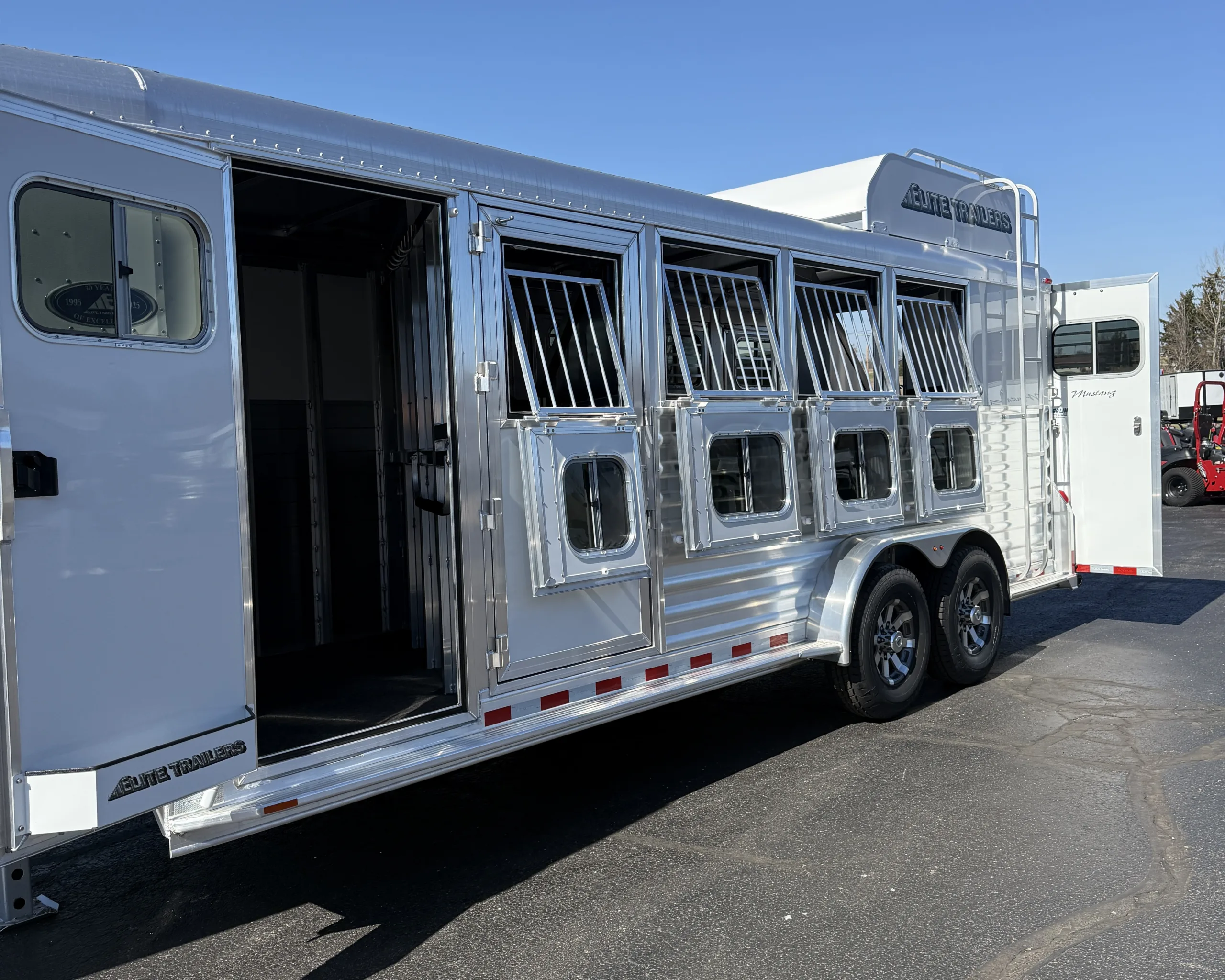
Finding a trailer you love is exciting, but there’s another important question to answer before you hitch up: Can your tow vehicle safely handle it?
Whether you’re hauling horses, livestock, equipment, toys, or a living quarters trailer, matching your trailer to your truck can make every trip safer and more comfortable. Understanding trailer towing capacity before you buy can also help you narrow down your options and avoid choosing a trailer that’s simply too much for your vehicle.
Here’s what to consider when matching your next trailer to your tow vehicle.
Start With Your Vehicle’s Towing Capacity
Your truck’s manufacturer sets a maximum towing capacity based on its specific configuration. Engine, transmission, axle ratio, drivetrain, cab style, and other equipment can all affect how much your vehicle can safely tow.
Don’t assume that every truck of the same make and model has the same rating. Check your owner’s manual, vehicle documentation, and manufacturer specifications for your exact vehicle.
Remember, the maximum number isn’t necessarily the weight you should plan to tow every day. Your passengers, cargo, hitch equipment, and other added weight also matter.
Understand Your Trailer’s Weight Ratings
When comparing trailers, you’ll see several weight-related terms. Understanding them makes it easier to determine whether a trailer works with your truck.
Pay attention to:
- GVWR: The maximum allowable weight of the trailer and everything loaded inside it
- Empty or curb weight: The approximate weight of the trailer without cargo
- Payload capacity: How much weight you can add to the trailer
- Tongue or pin weight: The portion of the trailer’s weight that rests on the tow vehicle
Always think about the trailer as you’ll actually use it. Horses, tack, feed, equipment, water, camping gear, and other cargo can add significant weight.
Don't Forget Your Truck's Payload
Trailer towing capacity tells only part of the story. Your tow vehicle also has a payload rating that limits how much weight you can put in or on the vehicle itself.
Passengers, cargo, tools, hitch equipment, and trailer tongue or pin weight all contribute to your truck’s payload.
This becomes especially important when you’re considering larger horse trailers and living quarter trailers. A truck might have enough towing capacity for the trailer’s overall weight but lack sufficient payload capacity for the weight placed over the hitch.
Consider Bumper Pull Vs. Gooseneck Trailers
Your hitch configuration also matters.
Bumper pull trailers work well for many lighter hauling needs and can offer convenient towing for properly equipped vehicles. Gooseneck trailers connect over the truck’s rear axle and often accommodate larger trailers and heavier loads.
Neither option works for every situation. Your truck, trailer size, cargo, towing experience, and typical trips should all influence your choice.
Leave Yourself Some Breathing Room
Matching a truck and trailer shouldn't become a game of getting as close as possible to the maximum rating. Staying comfortably within your vehicle’s limits can give you greater confidence when accelerating, braking, turning, and traveling over hills or uneven terrain.
Before buying, consider:
- What you'll haul regularly
- How much your typical load weighs
- How often you'll tow
- How far you'll travel
- Whether your hauling needs may grow
- Your truck's towing and payload limits
Understanding trailer towing capacity now can help you choose a setup that makes sense for the way you actually travel.
Find The Right Trailer For Your Tow Vehicle At Kerlin Trailers
You don't have to sort through every weight rating and trailer option on your own. The knowledgeable team at Kerlin Trailers can help you compare horse, living quarter, stock, enclosed cargo, utility, and other trailers based on your hauling needs and tow vehicle.
Visit Kerlin Trailers in Silver Lake, Indiana, or contact our team today. We'll help you explore your options and find a trailer that makes sense for your truck, your cargo, and your next adventure.
Frequently Asked Questions
How do I know how much my vehicle can tow?
Check the manufacturer's specifications for your exact vehicle configuration. Engine, drivetrain, axle ratio, cab configuration, and equipment can affect the rating.
Can I tow a trailer if it's under my truck's maximum towing capacity?
You also need to consider payload, hitch ratings, loaded trailer weight, passengers, cargo, and other factors before determining whether a combination works safely.
What's the difference between GVWR and trailer weight?
Trailer weight describes what the trailer currently weighs. GVWR represents the maximum allowable weight of the trailer plus its cargo.
Is a gooseneck better than a bumper pull trailer?
It depends on your truck and hauling needs. Goosenecks often work well for larger trailers and heavier loads, while bumper pull trailers can provide a practical option for lighter hauling.
Can Kerlin Trailers help me choose the right size trailer?
Yes. Bring information about your tow vehicle and hauling needs, and the Kerlin team can help you compare trailer sizes, features, and configurations.